Home Services Website Templates: Build a Professional Local Business Website With WordPress

supercozy Avatar
Home Services Website Templates

When someone needs a plumber, electrician, cleaner, HVAC technician, landscaper, or contractor, they usually make a quick decision.

They want to know what the business does, whether it serves their area, whether the work looks trustworthy, and how to get in touch.

That makes a home service website much more than an online brochure. It is often the place where a potential customer decides whether to take the next step.

The challenge is that building this kind of website from a blank WordPress installation can take considerable time. You have to decide how the homepage should be structured, how services should be presented, where testimonials belong, how projects should be displayed, and how visitors should find contact or quote information.

That is where home services website templates can provide a useful starting point.

A well-designed template gives you an established structure that you can adapt to the business instead of creating every section from scratch. The goal is not simply to make a website look professional. It is to create a clear path from finding the business to understanding the service, building trust, and making contact.

For businesses that are still developing their online presence, this is a natural next step after understanding why a strong web presence matters. If you’re starting with that broader question, see our guide to building a strong online presence for home services businesses.

What Should a Home Services Website Actually Do?

A good home service website should answer four basic questions quickly:

What do you do?
Where do you work?
Can I trust you?
How can I contact you?

Think of the customer journey as:

Find → Understand → Trust → Contact

First, the visitor needs to recognize the business and understand what service it provides. Next, they need enough information to decide whether the service is relevant to their situation. Then come the trust signals: completed projects, testimonials, team information, experience, FAQs, pricing information, or other useful evidence.

Finally, contacting the business should be straightforward.

This structure applies to almost every local service business. A homeowner looking for emergency plumbing has different immediate needs from someone planning a landscaping project, but both need clarity, relevance, confidence, and an easy way to reach the provider.

A website that focuses only on attractive visuals can miss this entirely.

The strongest home services website design starts with the customer’s questions and then uses design to make those answers easy to find.

Why Use Home Services Website Templates?

Starting from a blank WordPress site gives you maximum freedom, but freedom can also create unnecessary work.

You have to make dozens of decisions before you have something usable:

  • What should appear above the fold?
  • How many services should the homepage show?
  • How should individual services be presented?
  • Where should testimonials appear?
  • How should completed projects be displayed?
  • What should the contact section look like?
  • Which pages does the business actually need?
  • How should the layout work on mobile?

A purpose-built template provides a starting framework for these decisions.

Instead of spending your first hours deciding what a home service website should contain, you can begin with a structure that already reflects common business needs and then adapt it.

That can be particularly useful for freelancers and small agencies building several websites for local clients. A template does not replace strategy or professional design work. It simply reduces the amount of repetitive groundwork involved in every project.

The business still needs its own branding, photography, service information, pricing where appropriate, service areas, testimonials, and other relevant content. A template is the foundation, not the finished business strategy.

What Makes a Good Home Services Website Template?

Not every template designed for a service business is equally useful. A good starting point should support the way customers actually evaluate local services.

1. Clear service sections

Visitors should be able to understand what the business offers without digging through the site.

A plumbing company might provide drain cleaning, pipe repair, water heater installation, and emergency plumbing. An HVAC company might offer installation, maintenance, and repairs.

Services should be easy to scan, understand, and explore.

2. Project or portfolio layouts

For many trades, seeing the work is one of the strongest ways to understand what a company can do.

A contractor, painter, landscaper, roofer, or renovation company can use project and portfolio layouts to show completed work. Images and project details give potential customers something concrete to evaluate before contacting the business.

3. Testimonials and reviews

Trust matters when a customer is allowing someone into their home or hiring them for an expensive project.

Testimonials provide a place to present genuine customer experiences close to the points where visitors are making decisions.

They should support the rest of the website rather than act as decoration.

4. Strong calls to action

A website can explain everything correctly and still make it difficult to take action.

Calls to action should make the next step obvious: contact the business, request a quote, ask a question, or explore a service.

The appropriate action depends on the business, but the path should be clear.

5. Service area information

Local businesses need to communicate where they operate.

That might mean a city, group of neighborhoods, surrounding towns, or a wider service region. A visitor should not have to guess whether the business serves their location.

6. Contact and quote options

The contact page should not feel like an afterthought.

Phone details, contact information, quote requests, and other appropriate communication options should be easy to find throughout the website.

7. Mobile-friendly design

A significant part of local-service research can happen on a phone, particularly when someone needs a service while away from a computer.

A template should therefore provide a strong mobile experience, not simply a desktop layout that happens to shrink down.

8. Easy customization

The website should be adaptable to the actual business.

Colors, typography, imagery, layouts, headers, footers, and content should be able to reflect the company’s identity rather than leaving it looking like an unchanged demo.

9. Useful supporting pages

A professional website rarely consists of one homepage.

Services, individual service information, projects, about information, FAQs, contact details, and a blog or resource section can all contribute to the customer’s decision.

10. Room for future growth

A business may begin with five services and eventually offer ten. It may expand into another service area, hire additional staff, publish educational content, or create new project pages.

A good template should provide a structure that can grow with the business.

HomeLancer: A WordPress Theme Built for Home Service Businesses

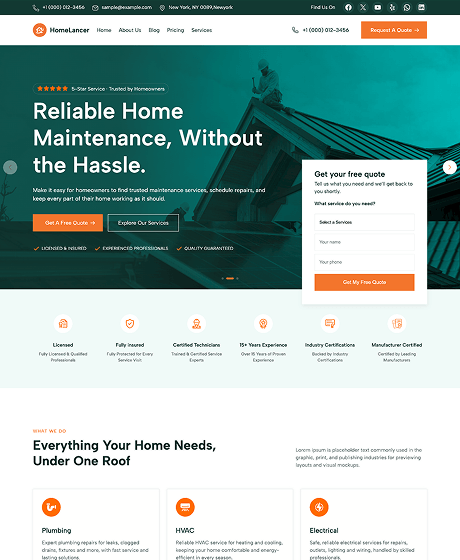
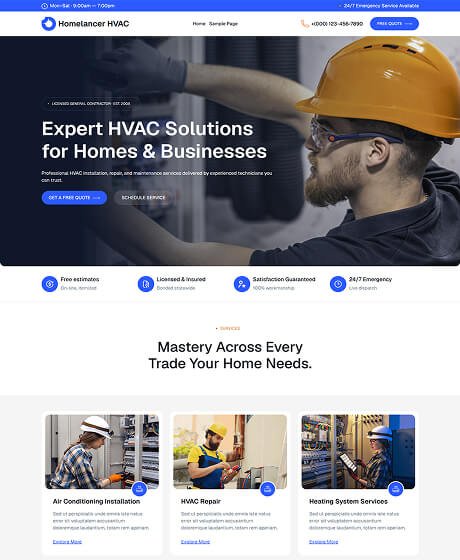
For businesses looking specifically for a home services WordPress theme, HomeLancer provides a practical starting point built around home services and related local businesses.

HomeLancer is designed for businesses including plumbing, HVAC, electrical, cleaning, handyman services, landscaping and gardening, painting, renovation, roofing, and construction. Its layouts are centered around the information these businesses commonly need to communicate.

The value of a niche-focused theme is not simply that the demo looks appropriate for a plumber or contractor. It is that the underlying website structure starts closer to the real requirements of the business.

For example, project and portfolio layouts can give remodelers, painters, landscapers, and contractors a place to demonstrate completed work. Testimonials provide a natural location for customer experiences. Service layouts make it easier to explain what the business actually offers. Pricing, team, FAQ, contact, and blog sections can provide additional information visitors may need before making an inquiry.

HomeLancer also supports starting with a ready-made website rather than a blank canvas. Its starter-site approach allows users to begin with a designed structure, replace the demo content, and adapt the website to their own branding and services.

The important distinction is that the theme provides the framework. The business still supplies the substance.

Your real service information, photographs, customer experiences, business details, service areas, and branding are what turn a template into your website.

HomeLancer Goes Beyond the Homepage

A strong homepage is useful, but it should not have to carry the entire business.

Consider a simple website journey:

Home → Services → Individual Service → Projects → Testimonials → Contact

Each page answers a different question.

The homepage introduces the business and establishes the main direction.

The services page provides an overview of what the business offers.

Individual service pages can explain specific services in greater detail and help visitors find information relevant to their needs.

Projects or portfolio pages show what the company has actually completed.

The about page gives the business an opportunity to explain its experience, people, approach, or story.

Testimonials add customer perspective.

FAQs answer common questions before they become objections.

The contact page provides the final step for someone ready to ask for help.

A blog or resources section can also become useful over time for answering customer questions and publishing helpful information.

HomeLancer is structured around this broader website approach rather than treating the homepage as the entire experience.

Home Services Website Templates for Different Trades

The right emphasis changes depending on the type of service business.

Plumbing

A plumbing website should make core services easy to identify and should clearly communicate how customers can request help. Emergency services, repairs, installations, service areas, and contact information may deserve prominent placement.

HVAC

For HVAC businesses, visitors may be looking for installation, repair, maintenance, or ongoing service. Organizing these services clearly helps customers find the relevant information without navigating through unrelated content.

Electrical

Electrical businesses need a website that communicates expertise and reliability. Service descriptions, testimonials, project examples, and clear contact options can help visitors understand what the company handles.

Cleaning

Cleaning companies often need to explain different packages or service types, coverage areas, pricing information where appropriate, and what customers can expect. Reviews can be particularly useful for communicating the experience of previous clients.

Landscaping

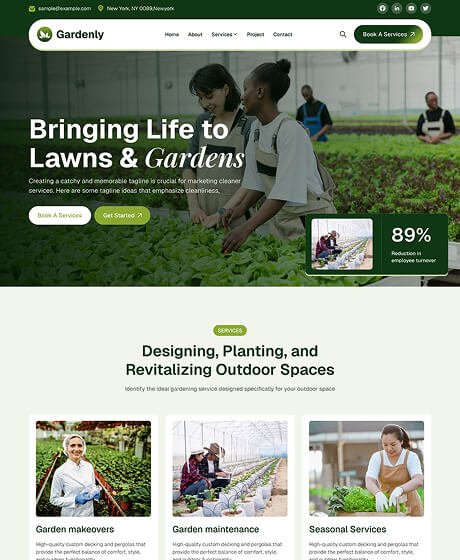
Landscaping and gardening businesses benefit from visual presentation. Projects and portfolios can show the quality and range of completed work while service sections explain what customers can hire the business to do.

Handyman

A handyman website may cover a broad range of services. A well-organized services section helps visitors quickly determine whether the company can handle their particular job.

Roofing

Roofing websites can use projects, service information, testimonials, and FAQs to address common customer concerns. Clear contact options are especially important for visitors who need an assessment or repair.

Painting

Painting is another highly visual service. Before-and-after imagery, completed projects, service descriptions, and testimonials can help potential customers understand the quality and scope of the work.

Renovation and construction

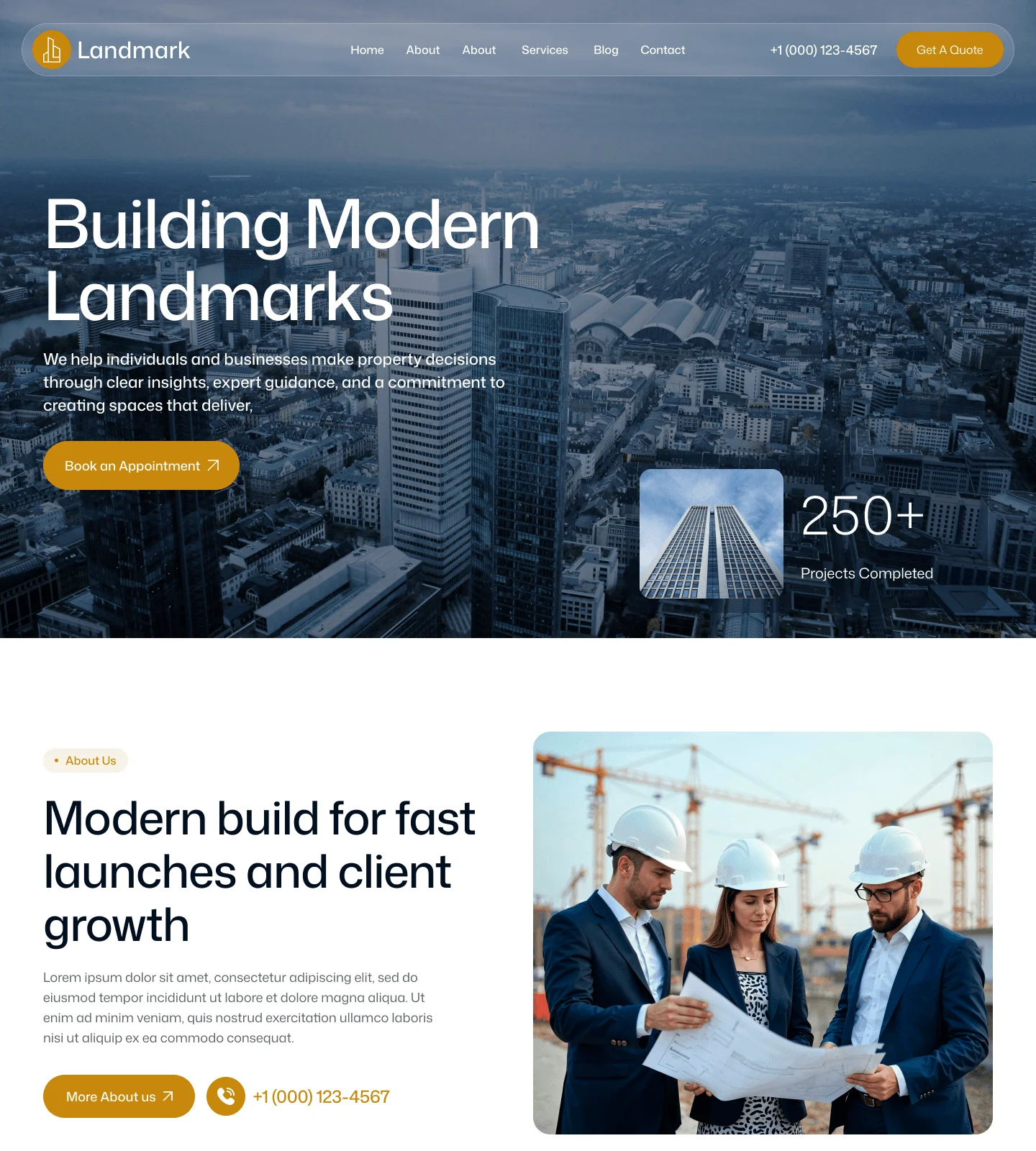
Renovation and construction projects often involve larger decisions and longer consideration periods. A strong website can use project case studies, portfolio imagery, service information, team details, and FAQs to give prospective clients a better understanding of the business.

The template does not need to dictate the content. It should give the business a sensible structure that can be adapted to its specific trade.

Local Business Website Templates: What Should You Look For?

Home services are part of a larger category: local businesses.

The same basic principles apply to restaurants, salons, repair companies, consultants, interior designers, agencies, fitness businesses, professional services, and local retailers, but the customer journey changes from one business to another.

That is why local business website templates should be evaluated by business purpose rather than appearance alone.

A restaurant may need prominent menus, hours, location information, reservations, and photography.

A salon may need services, pricing, team profiles, galleries, and booking information.

A consultant may need expertise, services, case studies, testimonials, and a clear way to schedule a conversation.

A local retailer may prioritize products, store information, opening hours, location, and purchasing options.

The right template should make the important information obvious for that particular audience.

What to Look for in Local Business Website Templates

Before choosing a template, ask a few practical questions.

Can customers understand the service?
The business offering should be immediately understandable.

Can visitors find the location or service area?
Local relevance needs to be clear.

Can visitors see proof?
Projects, portfolios, testimonials, reviews, certifications, or other appropriate evidence can help establish credibility.

Can they find customer feedback?
Genuine reviews and testimonials can support trust.

Can they contact the business easily?
The next step should never be difficult to discover.

Does it work well on mobile?
A local business website needs to remain useful regardless of screen size.

Can it be customized?
The finished website should look and feel like the business, not the template.

Can it grow?
The structure should remain useful as the business adds services, content, employees, locations, or other information.

These questions are more valuable than choosing a template simply because its homepage looks impressive in a demo.

Why WordPress Is a Practical Foundation for Service Businesses

WordPress gives a local business room to start small and expand.

A business can begin with a handful of essential pages and later add service pages, project content, a blog, additional functionality, or other tools as its needs change.

The WordPress Block Editor also makes content and layout editing part of the native WordPress experience. For block-based themes, the Site Editor can extend that flexibility to areas such as templates, headers, footers, and global design settings.

That makes WordPress particularly useful when the business wants ownership of a website that can evolve instead of being locked into a fixed structure.

The theme establishes the foundation. WordPress provides the environment for customization and growth.

HomeLancer + Cozy Blocks for Flexible Website Building

A theme and a block library serve different purposes.

The theme establishes the overall website foundation and visual direction. Additional blocks and patterns can provide more flexibility when building or customizing individual sections.

Cozy Blocks extends the native WordPress Block Editor with advanced blocks, ready-made patterns, templates, and tools for building different types of websites. Its current library includes 50+ advanced blocks, 700+ patterns, and 50+ starter templates across multiple website categories.

For a HomeLancer website, that can be useful when the basic theme structure needs to be extended or customized for a particular business.

The simple way to think about it is:

Theme = foundation
Blocks and patterns = additional building flexibility

The goal is not to add complexity. It is to have the flexibility to shape the website around the business.

For Freelancers and WordPress Developers

A niche-specific WordPress theme can be just as useful for the person building the website as it is for the business owner.

Freelancers and small agencies often build similar structures repeatedly. A plumber needs service pages. A contractor needs project examples. A cleaning company needs service information and testimonials. A landscaper needs a strong visual portfolio.

Recreating these common structures from zero for every client can consume time that could be spent on more valuable work.

A suitable template provides a framework that can be adapted:

  • Start with an established structure.
  • Replace demo content with client information.
  • Apply the client’s branding.
  • Adapt sections to the actual services.
  • Add or remove pages as needed.
  • Refine the customer journey.
  • Focus more time on strategy, content, and client-specific requirements.

This does not mean a template replaces professional expertise. Quite the opposite.

The developer still needs to understand the client’s business, organize its information, make sensible design decisions, ensure the website works well across devices, and tailor the experience to the intended audience.

The template simply gives that expertise a stronger starting point.

A Simple Home Service Website Structure

If you’re unsure what pages a home service website needs, this is a practical starting structure:

Homepage

Introduce the business, primary services, service area, trust signals, and the main next step.

Services

Give visitors an overview of everything the business offers.

Individual Service Pages

Explain important services in enough detail for customers researching a specific problem.

Projects or Portfolio

Show completed work, particularly for visual trades such as renovation, landscaping, painting, roofing, and construction.

About

Introduce the business, team, experience, approach, or other information that helps customers understand who they are hiring.

Testimonials

Present genuine customer experiences that support trust.

Service Areas

Explain where the business operates so visitors can quickly determine whether the service is available to them.

FAQs

Answer common questions about services, processes, pricing, preparation, timelines, or other relevant topics.

Contact or Request a Quote

Make it easy for visitors to take the next step.

Blog or Resources

Publish useful information that answers customer questions and gives the business a place to build helpful content over time.

Not every business needs every page immediately. The right structure depends on the services, audience, location, and goals.

Don’t Choose a Template Just Because It Looks Good

A visually impressive demo can make a template tempting, but appearance should not be the deciding factor.

Ask what happens after the visitor arrives.

Can they understand the business?

Can they find the right service?

Can they determine whether the business serves their area?

Can they see evidence of previous work?

Can they find testimonials?

Can they get answers to common questions?

Can they contact the company without searching through the site?

Then consider the practical side:

Structure. Does the template support the pages the business needs?

Usability. Can visitors find information quickly?

Content hierarchy. Are important messages given appropriate prominence?

Conversion path. Is there a clear route from information to action?

Customization. Can the website reflect the actual business?

Mobile experience. Does the structure remain useful on smaller screens?

Business fit. Does the template match the industry and customer journey?

Future flexibility. Can the website expand as the business grows?

A template that looks good but makes these things difficult may create more work later.

From Local Business to Online Business

A website is an important part of an online presence, but it is not the entire presence.

For a home service business, think of the broader picture as:

**Website

  • Local visibility
  • Reviews
  • Social presence
  • Helpful content
    = A stronger online presence**

Each part supports the others.

The website gives customers a central place to understand the business. Local visibility helps people discover it. Reviews provide customer perspective. Social platforms can provide another way to demonstrate activity and connect with the community. Helpful content can answer questions that customers are already asking.

None of these elements guarantees rankings, traffic, or leads. They work together as part of the broader process of building a credible online presence.

For more context on that bigger journey, return to our guide to building a strong online presence for home services businesses.

Frequently Asked Questions

A home services website template is a pre-designed website structure created for businesses such as plumbers, electricians, HVAC companies, cleaners, landscapers, contractors, and other service providers. It provides a starting point for pages, layouts, and content sections that can then be customized for the business.

A typical home service website should clearly present the business, its services, service areas, projects or portfolio, testimonials, about information, FAQs, contact or quote options, and other relevant content. The exact structure should reflect the business and its customers.

Look for a theme with a suitable business structure, clear service layouts, project or portfolio presentation, testimonial sections, contact options, mobile-friendly design, customization capabilities, and enough flexibility to support future growth.

es. WordPress themes can provide a practical foundation for many types of local businesses. The key is choosing a theme whose structure fits the business and then customizing the content, branding, pages, and customer journey around the specific audience.

Yes. A niche-specific template can give freelancers and agencies a reusable starting framework for client websites. It can reduce repetitive setup work while still leaving room for custom branding, content, layouts, and business-specific strategy.

That depends on the theme and its editing capabilities. HomeLancer is built around WordPress’s block-based editing experience, allowing users to adapt the website’s content, branding, layouts, headers, footers, and sections through the WordPress Site Editor.

A website can give a home service business a central place to explain its services, establish credibility, show completed work, communicate service areas, answer questions, and make contact easier. It should be considered one part of a broader online presence rather than a standalone guarantee of business growth.

Build Your Home Services Website With HomeLancer

The right website does not need to begin with a blank screen.

Start with a structure that makes sense for the business. Customize it around the actual services and customers. Add useful information, genuine project examples, customer experiences, and clear contact options. Then launch and improve the website as the business grows.

For home service businesses, contractors, and related local businesses, HomeLancer provides a practical WordPress foundation built around the needs of service-focused websites.

And for freelancers or WordPress professionals, the same approach can make client projects easier to start without turning every website into a completely blank-canvas exercise.

A good template does not build the business for you.

It gives you a better place to begin.

Leave a Reply

Your email address will not be published. Required fields are marked *